





Federal immigration crackdown: CUSD prepared, proactive

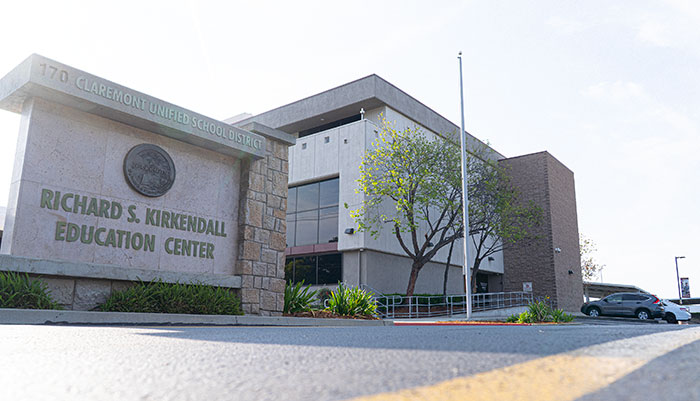
Photo/by Germar Derron
by Mick Rhodes | editor@claremont-courier.com
President Donald Trump’s immigration crackdowns in Democratically-controlled states have not only resulted in death and injury to U.S. citizens and undocumented immigrants alike, they have propagated fear in the Hispanic and other targeted communities that previously safe havens such as schools are no longer secure.
“We’re hearing a lot of fear out of our families that either have undocumented members or are in communities where they’re friends and family members with undocumented folk, definitely,” said Claremont Unified School District Assistant Superintendent, Student Services Kevin Ward.
But Claremont, and indeed the state of California, has safeguards in place to prevent federal Immigration and Customs Enforcement and Customs and Border Protection agents from coming onto campuses. Assembly Bill 49 and Senate Bill 98, which were signed into law in September 2025, mandate schools must be alerted when immigration enforcement is on or near a campus, and prohibits staff from allowing immigration agents to enter schools without a valid judicial warrant, subpoena or court order.
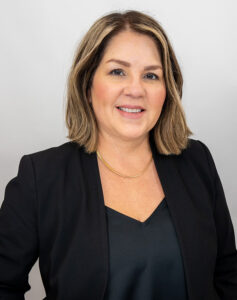
CUSD Senior Liaison, Youth and Family Services Rosa Leong and her team work with local community and faith-based organizations to help deliver food to 14 to 20 district families affected by President Trump’s immigration crackdown. Photo/courtesy of CUSD
CUSD has established procedures and protocols for when a federal immigration officer requests information about a student or access to a student on legal grounds. Part of that involves requesting agents remain in school offices until a cabinet level administrator from the district office arrives on scene to assess the situation, “Again, to hopefully review their lawful subpoena, to work with them to find out a way for the district to meet the subpoena within compliance of the law,” Ward said. “Obviously it’d be our responsibility to verify the validity of a subpoena, so we’d have legal counsel who’s well prepped on these matters that we would reach out to in that moment to help determine the credibility of any subpoenas presented.”
The district has been updating its procedures and policies on the topic of immigration for some time, all while fielding an increasing number of questions from staff at its 10 campuses.
“Obviously I think a lot of our staff are concerned for our students and their families and what they’re going through,” Ward said. “But our best response to that is to know what to do in the off chance that it happens to us.”
Since last July, Senior Liaison, Youth and Family Services Rosa Leong and her team have been working with local community and faith-based organizations to help deliver food to 14 to 20 families affected by the crackdown that have students in CUSD schools. Many of these families are fearful of shopping on their own, Leong said, and some of them have had family members picked up by ICE or CBP.
“There’s fear; fear of going to work, fear of just doing the basic things, dropping off their children at school, picking them up, going to the grocery store,” Leong said. “Really just basic, everyday life has become a real challenge.”
According to 2024-25 data, 47% of CUSD students are Hispanic/Latino, the primary racial demographic of Trump’s immigration crackdown.
Leong works closely with the LA County Office of Education’s Office of Immigrant Affairs, tapping them for community resources for guidance and advocacy, and with LA-based nonprofit Coalition for Humane Immigrant Rights.
Over the 10 years Leong been at CUSD she’s grown accustomed to helping families experiencing food insecurity and/or homelessness. But the current climate is something else altogether.
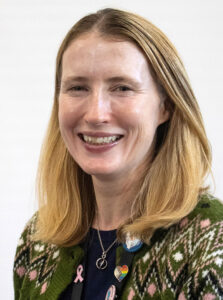
CHS teacher Alice Kennedy and her ethnic studies students created a “know your rights” research project aimed at changing “fear to empowerment” for local residents affected by recent federal immigration crackdowns. Photo/courtesy of Alice Kennedy
“This has brought on a different level of support just in terms of the type of need, the fear,” she said. “That was really kind of a crisis response for us, just connecting them with organizations that can support them with the legal side of that. We’re just here to support them with the community resources that we have.”
And it’s not just CUSD administrators who are getting involved.
Alice Kennedy is a fourth-year ethnic studies and English teacher and yearbook advisor at Claremont High School. In January 2025, when Trump’s crackdown on immigrants was in its infancy, she and her ethnic studies students got inspired to do something.
“From the students and myself it was just watching what was happening across the nation and in our own local communities, watching how students were being impacted by these polices, and seeing fear in the community and wanting to change that fear to empowerment,” Kennedy said.
Kennedy and her students created a “know your rights” research project. The results were posted at CHS, then presented to caregivers, faculty and staff at San Antonio High School and Sycamore, Mountain View, and Oakmont elementary schools.
The goal of the project was “really educating and empowering people on what to do if they encounter ICE,” Kennedy said.
The project also included an update of CUSD’s support for undocumented students and families page on its website, which now contains a wide variety of information for undocumented students, their families, and everyone else. The comprehensive list of resources is viewable at cusd.claremont.edu, search “supporting undocumented resources.”
“It turned into not just a class project and really turned into them taking ownership and really wanting to empower their community,” Kennedy said.
Kennedy’s 2026 ethnic studies students are continuing the project with updates to the district’s undocumented students and families webpage, by offering “know your rights” presentations to students and staff at CHS, and by handing out “red cards” — wallet-sized “know your rights” primers — and family preparedness plans to Mountain View, Sycamore, and Oakmont elementary schools and to the community at large. Kennedy said she hopes to implement the program at CUSD’s other four elementary schools this year.
Of course, in the year since Kennedy and her students created the project, the federal government’s immigration crackdown has only gotten more intense, violent, and deadly.
“And I think that’s added to the momentum,” Kennedy said. “What started as a small group of students being passionate about this has really turned into a much larger movement.”
Related




0 Comments