




CGU announces Kingsley and Kate Tufts Poetry Award winners
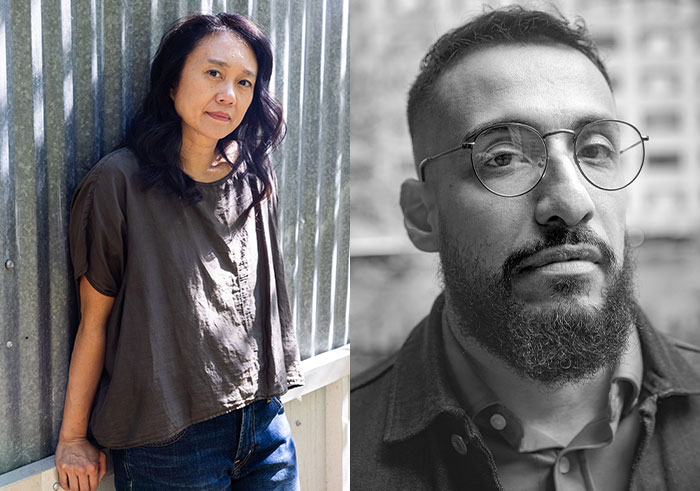
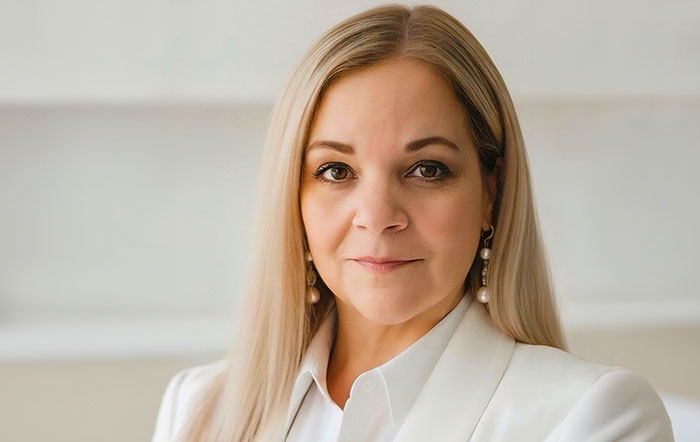
(L-R) Claremont Graduate University has named Jennifer Chang and Eduardo Martinez-Leyva as winners of the 34th annual Kingsley Tufts and Kate Tufts Poetry Awards, respectively. Photos/by Jessica Attie, Nicholas Nichols
by Andrew Alonzo | aalonzo@claremont-courier.com
Claremont Graduate University recently announced veteran poet Jennifer Chang and newcomer Eduardo Martinez-Leyva are winners of the 34th annual Kingsley Tufts and Kate Tufts poetry awards, respectively.
Chang won for “An Authentic Life,” Martinez-Leyva for “Cowboy Park.” The poets will take part in a free and open to the public reading and reception at Pomona College’s Lyman Hall, 340 N. College Ave., Claremont, at 6 p.m. Wednesday, April 15. Register at eventbrite.com, search “Tufts Awards.”
The Kingsley Tufts is awarded to books by mid-career poets and comes with a $100,000 prize. The Kate Tufts recognizes a debut book and includes a $10,000 prize.
Jennifer Chang
It was during a date night with her husband that 49-year-old Austin resident Jennifer Chang got the call telling her she’d won the coveted Kinglsey Tufts Award. Her reaction was emphatic. “I was like what the f**k! Are you f**king kidding me?” she said.
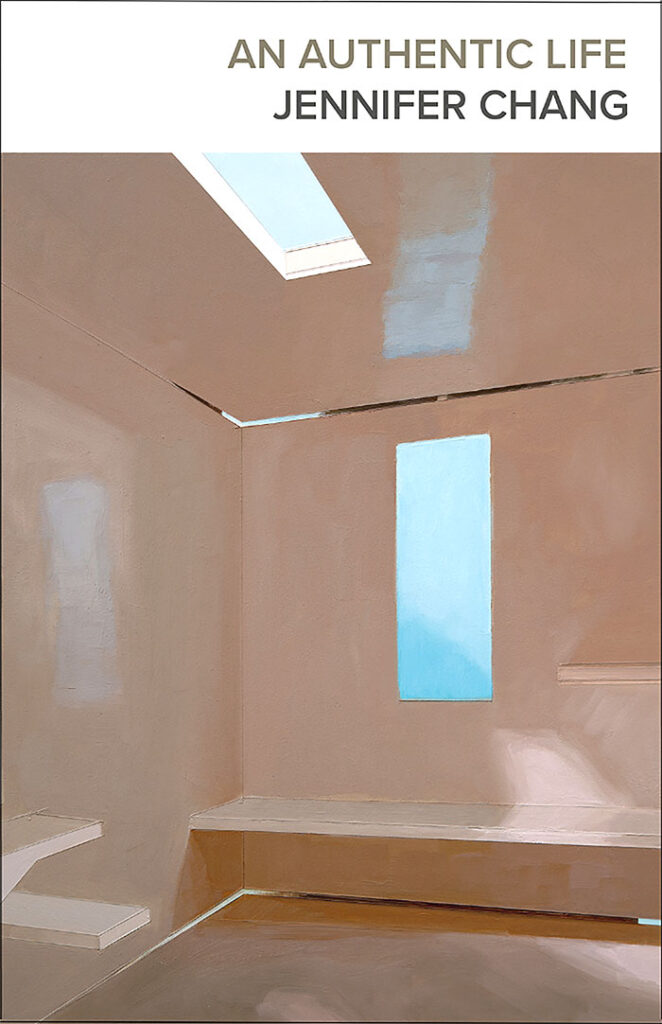
Claremont Graduate University recently named Jennifer Chang’s book “An Authentic Life” as winner of its 34th annual Kingsley Tufts Poetry Award. Photo/courtesy of Copper Canyon Press
Chang has history with the Kingsley Award. “I was a preliminary reader for it about 12 years ago,” she said. “I never thought I would be considered for it.”
Maybe she should have: “An Authentic Life” was a finalist for both the National Book Critics Circle Award and the Pulitzer Prize in Poetry.
The book weaves stories of Chang’s upbringing in a Chinese family and personal identity conflicts with how familial patriarchal power and authoritative power parallel one another.
“There’s a lot of political background to what motivated the voice, the speaking out, but it was also really personal because I was also feeling very frustrated in our family structures,” Chang said. “I come from a Chinese family and there are very kind of rigid conceptions about power, in particular patriarchal power … It felt like I needed to somehow, not knowing what I wanted to say, I needed to speak out against this feeling that there was something very wrong, not with just how the world was at that moment, but with the structures that we found ourselves in, that I was somehow complicit in these power structures.”
She wrote “An Authentic Life” while teaching in Washington D.C. following President Trump’s first election in 2016.
“I kept returning to questions about where do our structures of power came from? Where does this democracy come from? Are we really free?” Chang said. “I don’t want to get too personal, but [my father is] a complicated person and he wielded power, but he wasn’t always responsible with it. He wasn’t always reliable. His marriage with my mother was a very unhappy one, very contentious, and yet we all had to kind of submit to his power, submit to the fact that he was the father … Even when you resist that as a child and as an adult, you still have absorbed it as a structure … It felt parallel to other places where power has been male dominated.”
Some of the most meaningful by-products of “An Authentic Life” have been conversations with other women who felt represented in the book, Chang said.
“One of the things that’s really moved me is when younger Asian Americans come up to me and talk to me about the book and they talk to me about their overbearing, domineering fathers. I just didn’t expect that,” she said. “It’s made me feel deeply connected to people that I think I’ve longed to feel connected to.”
That also plays into a larger theme present in the book. “It’s not just about power, it’s also about vulnerability,” Chang said. “It’s about how we treat each other and how we’re honest with each other, tenderness, and trying to find your place in the world despite everything.”
“An Authentic Life” is available at coppercanyonpress.org and wherever books are sold.
Eduardo Martinez-Leyva
Forty-one-year-old LA resident Martinez-Leyva is still processing the success of “Cowboy Park,” published in 2024 by University of Wisconsin Press. Along with the Kate Tufts award, it also won the 2025 Lammy Award for LGBTQ Poetry, the 2024 Felix Pollak Prize in Poetry, and Texas Institute of Letters Award for First Book of Poetry.
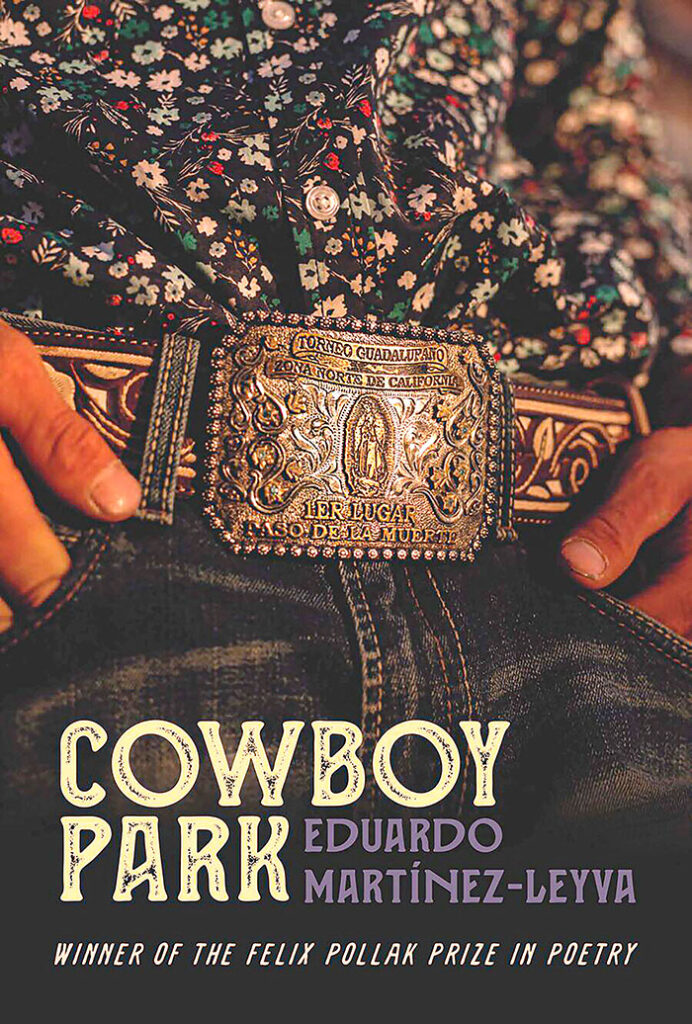
Claremont Graduate University recently named Eduardo Martinez-Leyva’s “Cowboy Park” as the 34th annual Kate Tufts Poetry Award winner. Photo/courtesy of University of Wisconsin Press
Named after a park he frequented as a child in El Paso, Texas, “Cowboy Park” is Martinez-Leyva’s invitation to readers to step into his shoes as a queer Mexican American and listen to the various neighborhood voices that shaped him. It’s also an exploration of his psyche in the wake of several tragedies, including the 2019 Walmart shooting in El Paso that his mother survived, the deportation of his older brother years prior, the long-held childhood stress of dealing with dismissive authority figures, and his own sexual orientation.
“The core of everything in ‘Cowboy Park’ is about survival and how a community that again is often pushed to the margins, misinterpreted, stereotyped and persecuted, still finds a way of surviving and being resilient and finding their way, despite or maybe because of all the pushback in the darkness,” Martinez-Leyva said. “It’s again, a speaker trying to navigate the circumstances in the cards that they were dealt with in the best way possible without necessarily shying away from the harshness of reality … Beauty can’t exist without its counterpart.”
“Cowboy Park” was an on-again off-again project. It started as his thesis manuscript during a master’s program at Columbia University, which he finished in 2015. He then became a high school English teacher and put poetry on the back burner.
It wasn’t until he secured a seven-month Fine Arts Work Center fellowship in Provincetown, Massachusetts in 2021 that he returned to writing. “The large part of ‘Cowboy Park’ started there,” he said.
His motivation for writing includes his English students at Crossroads School for Arts and Sciences in Santa Monica and today’s chaotic world.
“I feel like the driving force for me is, using art, using words, using literacy, especially again now when things feel incredibly precarious and there’s this sense of erasing and getting rid of all these platforms and avenues and artistic talent now more than ever,” he said. “I feel that that’s where we need to sort of use our voice, use our creativity to showcase, to depict and to convey our stories.”
As for what’s next he said, “I have some ideas for a future project, but I’m letting the poems guide me.”
“Cowboy Park” is available at uwpress.wisc.edu and wherever books are sold.

0 Comments