




Claremont Heritage celebrates 50 years of preservation
Part 2
by John Neiuber
For years people believed Claremont had the most stringent historic preservation regulations in the state. The Los Angeles Conservancy once gave Claremont an A+ for preservation, a rating usually reserved for cities with a preservation ordinance, which at the time Claremont did not have. Fortunately, the long-standing myth served both preservationists and the city, and allowed them to engage in meaningful preservation activities. Fast forward from the 1970s to 2024, where in May of that year the City Council adopted its first ever preservation ordinance, changing myth to reality.
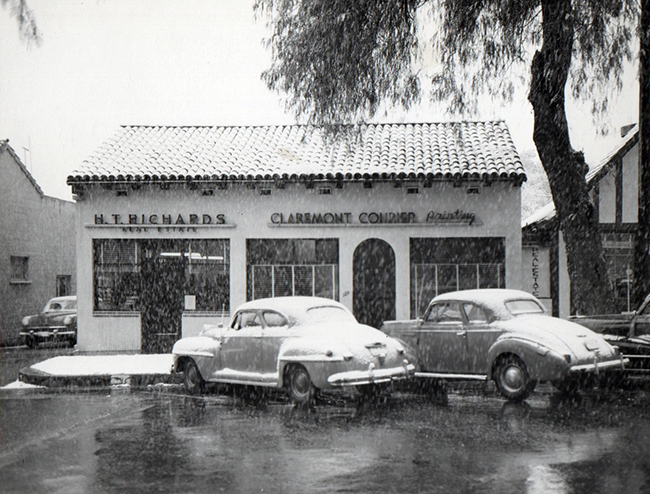
The original Claremont Courier building on Harvard Avenue is now home to Finney’s Crafthouse. Photo/courtesy of Claremont Heritage
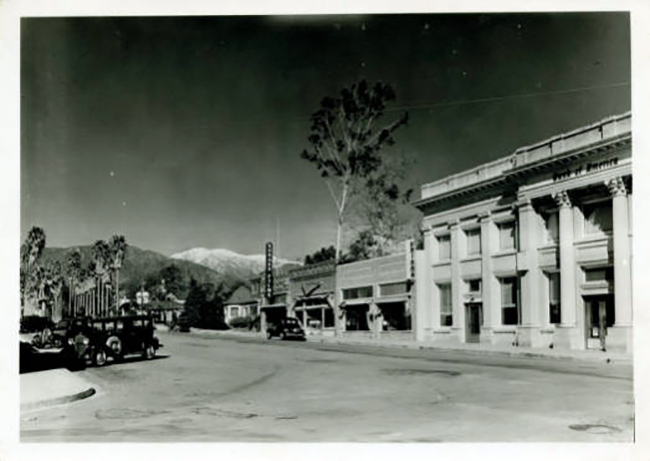
The former bank building at Yale Avenue and Second Street, now the Verbal Building that houses Pizza N’ Such, is one of the most iconic and often photographed buildings in the Village. Photo/courtesy of Claremont Heritage
Over the last five decades, preservation became part of the culture of Claremont, and it continues as a shared value of the community. It is because of the community preservation mindset and actions by city leaders past and present that the Village, the historic buildings and houses, and our neighborhoods remain largely intact, reflecting the history of how Claremont developed. And because of preservation, Claremont attracts visitors from far and wide, contributing to the economic vitality of the city.
In 1976, a group of citizens that included founding members Ray Fowler, Enid Douglass, David Cressy, Pamela Herrlinger, Donald Pflueger, Connie Weber, Robert Stafford, and Jim Stickles formed Claremont Heritage. They had witnessed the shuttering of the Santa Fe Depot, the demolition of the Spanish Revival library, and the Pacific Electric Railway station on First Street and College Avenue, which was once known as the most beautiful of the stations of the vast railway system that connected all of Southern California.
These Claremont preservationist pioneers proposed several names, such as Claremont Historical Trust, before the founding trustees settled on Claremont Heritage. Cressy said that at a dinner at Pitzer College to launch the project several people objected, saying Claremont did not need any more organizations. Those same people would be amazed, or perhaps not, to find a city with over 200 active organizations today.
Through the efforts of Claremont Heritage and the City of Claremont, the State Office of Historic Preservation awarded a grant for a survey of the city’s historic resources in 1977. In 1979, the Claremont Historic Resources Center, staffed by Claremont Heritage, opened and for five years served the community as a center on city history. It was in this office that the staff prepared the historical preservation element for Claremont’s General Plan, and continued the inventory of structures 50 years and older. The inventory has increased awareness and appreciation for Claremont’s past.
The inventory is important, not only as a source of information and a planning tool, but also as a record of our material culture. Each building is documented, including photographs, in the inventory sheet.
And today Claremont Heritage and the City of Claremont are embarking on a cooperative project to add more than 200 additional structures to the historic register’s current inventory of about 1,100 homes and buildings.
The buildings we lost, that provided the stimulus for the preservation movement in Claremont, were not demolished in vain. Out of those losses began a movement that was able to save other structures from the same fate. Buildings Claremont Heritage advocated for can be found everywhere. The Santa Fe Depot is one of the first examples. The Packing House is another, and the former Union Ice Company office that currently houses The Back Abbey restaurant is another.
The Post Office is a preservation success story, as is the east Village, which is protected by the Village historic overlay district, another example of advocacy by Claremont Heritage. The Old School House at Foothill and Indian Hill is another. The Vortox building on Indian Hill is yet another, as is Padua Hills Theatre. And Claremont Heritage continues to push for the adaptive reuse of buildings, which we see with structures like the Packing House and the projected use of the Vortox building, or the stone building that houses Sherwood Florist.
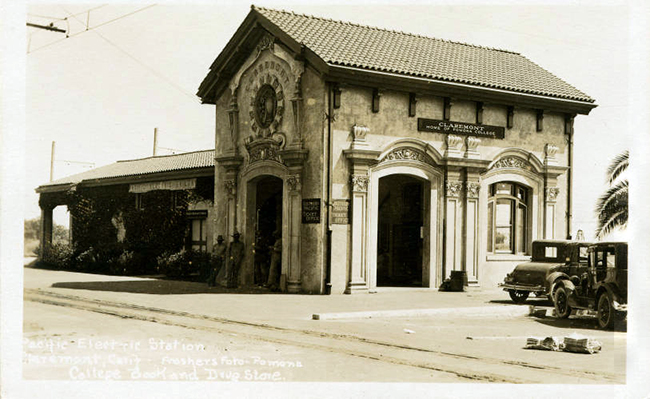
Called the most beautiful of all the Pacific Electric Railway stations, the Claremont station was at First Street and College Avenue. Photo/courtesy of Claremont Heritage
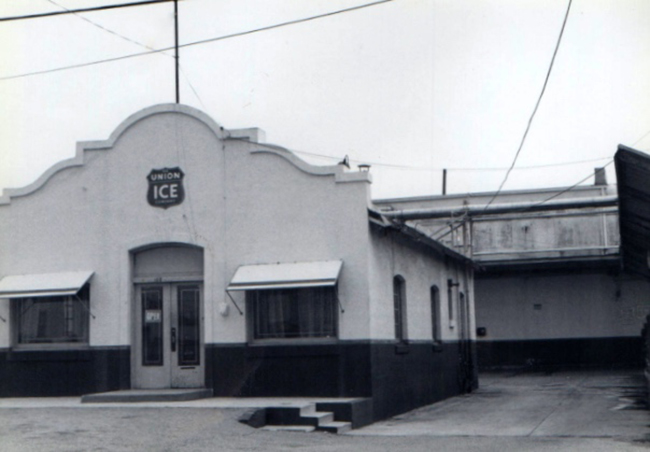
The Union Ice House office was adaptively reused to house The Back Abbey on Oberlin. Photo/courtesy of Claremont Heritage
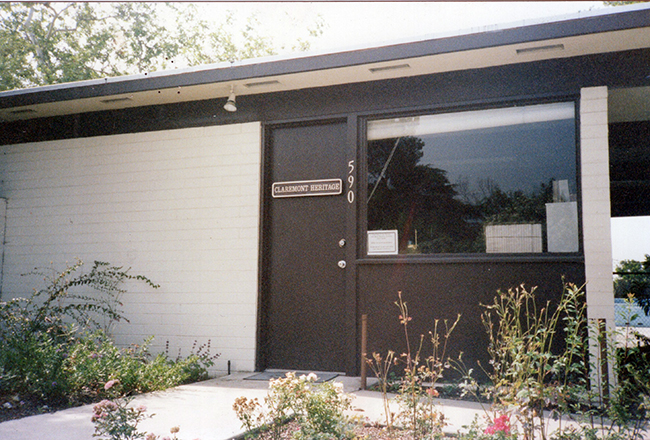
Claremont Heritage’s first office was in this building on Bonita Avenue. Photo/courtesy of Claremont Heritage
To stand in Bridges Hall of Music, or the Garner House in Memorial Park, or in front of the Verbal Building at Yale Avenue and Second Street is to stand in the same physical environment as those that came before us. It is to walk through the ages, where each building we encounter represents a timeline of our city and tells a story about our shared history and the people that came before us. These are parts of our culture that create the essence of our existence as a city and a people. They are our legacy, here to inform our future.



0 Comments