





Claremont Heritage celebrates 50 years of preservation
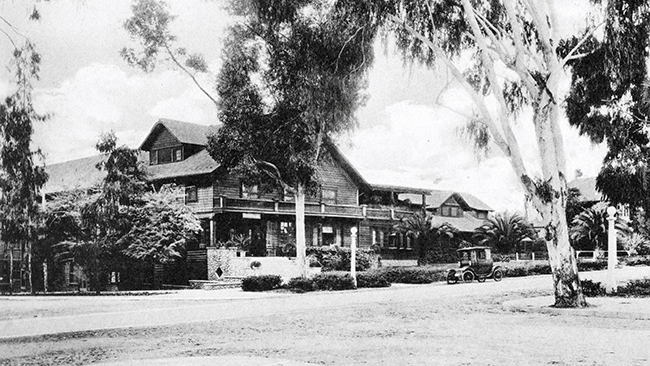
The 72-room Claremont Inn stood at the corner of College and Bonita avenues and was the gathering place for both town and gown for years. Photo/courtesy of Claremont Heritage
Part 1
by John Neiuber
This year Claremont Heritage celebrates its 50th anniversary. The organization has adopted “Preservation 50: Our Legacy, Our Future” as the theme for 2026.
The theme focuses on the achievements of the past 50 years and the vision for the next 50. Since its founding in 1976, Claremont Heritage has led the preservation movement in the city that has resulted in saving, documenting, and celebrating its historic and cultural resources.
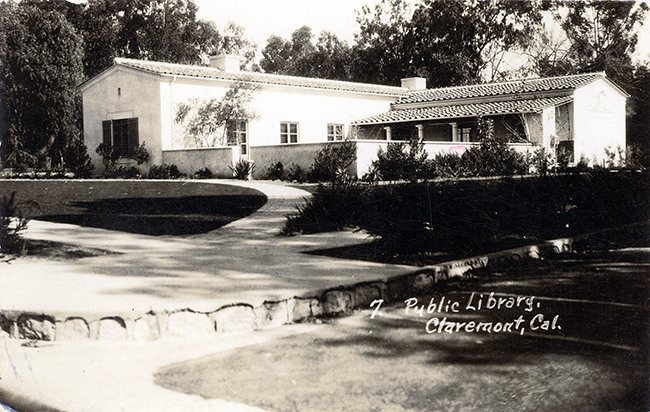
The original Spanish Revival style Claremont Library, designed by noted architects Marston and Maybury, was demolished in the 1970s. Photos/courtesy of Claremont Heritage
The unique and timeless feel of the city, the institutions, the Village, and the neighborhoods are the result of the dedication and tireless work of many individuals over the years that have come together to ensure that Claremont remains Claremont — that sense of place that residents and visitors alike recognize, value, and embrace wholeheartedly.
Claremont Heritage celebrates its golden anniversary by acknowledging the legacy of its founders and their preservation efforts while looking to the future, knowing there is still much work to be done to preserve its cultural resources and neighborhoods so the city retains its desirability as one of the best small towns in which to live, work, and play.
This year represents a milestone for Claremont and preservation. In addition to the 50th anniversary it is also the 100th anniversary of the Garner House, the headquarters of Claremont Heritage. Claremont Heritage will celebrate the house with an event during preservation month in May. Heritage is also applying to have the house listed on the National Register of Historic Places.
2026 also marks the 100th anniversary of Route 66. Heritage is working with city leadership, the chamber of commerce, the Claremont Courier, and the California Historic Route 66 Association to honor the celebrated “Mother Road.” Claremont Heritage will host a special Claremont Route 66 tour in September.
The 2026 gala in May and home tour in October will be organized around the 50th anniversary theme, as will the Hispanic Heritage Month celebration in September. Be looking for special exhibitions throughout the year.
Historic preservation came into its own in Claremont in the 1970s. The demolition of the Claremont Inn, the Claremont Library, and the Woodford House at Seventh Street and Yale Avenue prompted an active group of citizens to work for the establishment of the Claremont Historic District in 1971, and for a revision of the ordinance governing that district in 1976. Also in 1976, Claremont Heritage was founded.
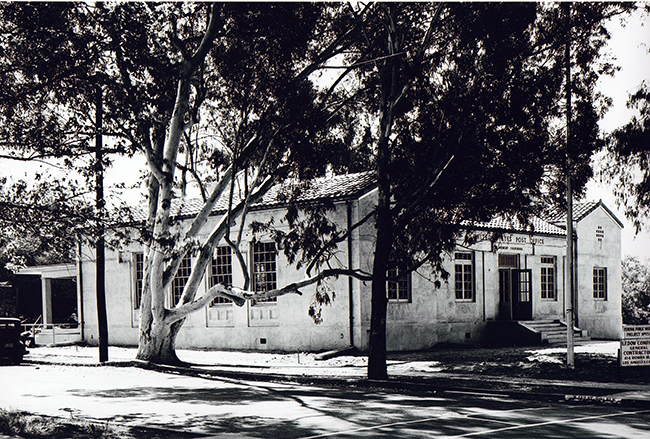
Claremont’s U.S. Post Office was one of the first buildings saved through the efforts of Claremont Heritage and concerned citizens.
It was through the efforts of Claremont Heritage that the initial historic resources survey was conducted. From 1979 to 1984, The Claremont Historic Resources Center, staffed by Claremont Heritage, worked on a historic preservation element for the Claremont general plan, prepared a demolition ordinance, conducted a survey in the remaining citrus area of the city, developed self-guided walking tours, and completed the popular “The Claremont Game,” and many other preservation projects.
While leading The Claremont Historic Resources Center, Judy Wright also completed the research for and the first edition of the definitive history of Claremont, “Claremont – A Pictorial History,” published in 1980.
The City of Claremont embraced the preservation movement and accomplished several preservation efforts in public buildings during the 1970s. Among those was the renovation of city hall and the saving of the U.S. Post Office. Saving the post office not only meant the preservation of a structure, but the added benefits of bringing the public to the Village that contributed to the economic health of the area. It also honored the legacy of Helen Renwick, whose house stood where the Benton Museum of Art is currently located. Renwick had donated land at each of the corners of Harvard Avenue and Second Street for the express purpose of establishing a civic center, something that survives today. Her house was moved across College Avenue when the Benton Museum was built and still overlooks the civic center she envisioned.
During the 1970s Claremont became a maintenance community instead of a growing community. That required city leadership to focus more attention on housing programs, design compatibility, and transitions between residential and commercial properties. Awareness grew about the preservation of street trees as they became characterized as urban forests. Healthy neighborhoods, parks, the Village, historic areas, hillsides, and citrus groves were all deemed preservation goals.
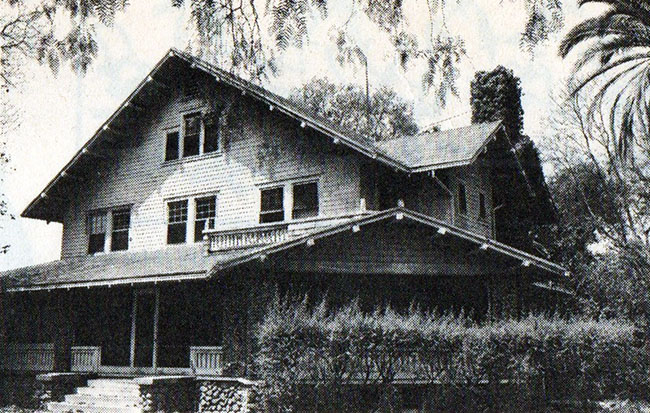
The Woodford House, designed by prolific Los Angeles architect Arthur Acker, was demolished to make way for condominiums at Seventh Street and Yale Avenue.
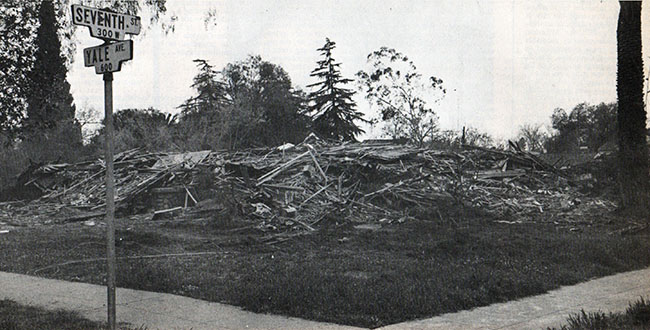
The demolition of the Woodford House, the Claremont Inn, and the Claremont Library gave rise to the preservation movement in Claremont.
Claremont citizens debated about what was important and distinctive about our community. Those debates informed the 1980 general plan, which was considerably different from the first official plan from 25 years earlier. Rather than a focus on development, the 1980 plan made policy recommendations covering such issues as housing inspection programs, support for moderate income housing, the suggestion for a population ceiling, a street management program, the development of an urban trails system leading to the wilderness areas, a neighborhood section, and an historic preservation section.
This series will be continued in February.






0 Comments