




First Amendment: Free speech in the crosshairs
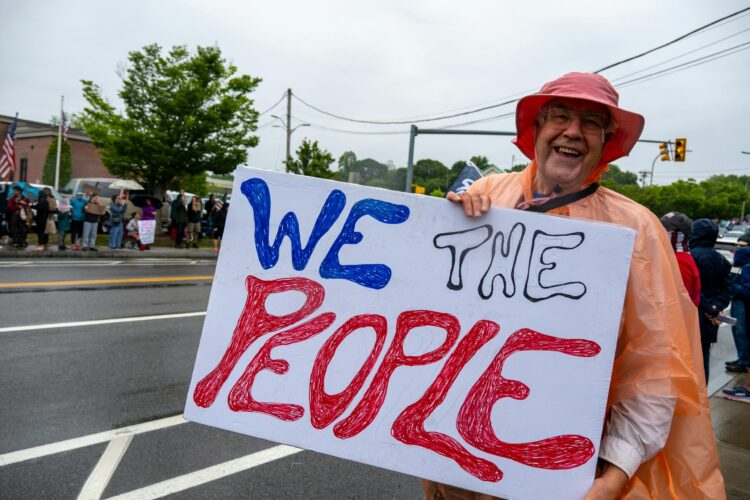
Photo/by Beth Fitzpatrick, c/o pexels.com
by Peter Weinberger
Publisher’s note: Free speech is the foundation of liberty. History shows how quickly it can be silenced once power is consolidated. Today, those rights are under direct threat. As journalists, and as Americans, we have a duty to speak out and hold leaders accountable. At the Claremont Courier, we invite our readers to do the same — and we will stand with you in that effort.
Where are we now?
The federal government is moving aggressively to redefine how Americans can speak and what journalists can report — a trend that has intensified since the September 10 assassination of conservative activist Charlie Kirk at Utah Valley University. For President Trump, this marks a notable shift: from stated concern over hate speech to targeting speech critical of himself and his administration.
What once sounded like political rhetoric is now becoming policy. New rules have limited Pentagon press access, the Federal Communications Commission has threatened broadcasters, and ordinary citizens have faced retaliation for social media posts.
Those policies are reinforced by Trump’s own words. He has been unusually candid about his views. “They’ll take a great story and they’ll make it bad,” he said last week, referring to network newscasts. “See, I think that’s really illegal.” But it is not. In most cases, mainstream media is simply fact-checking the president’s statements — some of which are demonstrably false.
The question now, observers say, is how much the Trump administration is willing to act on this rhetoric.
Past presidents have restricted press freedoms during national crises. Abraham Lincoln and Franklin D. Roosevelt acted in wartime. Trump, critics note, has offered no justification beyond personal dislike of criticism — a stance with broad implications for his political opponents and for democratic institutions.
FCC and the media
The FCC has emerged as a flashpoint. Chairman Brendan Carr warned networks they could face fines or lose licenses for broadcasting what he called “garbage” content. He urged Disney and ABC affiliates to act, saying: “We can do this the easy way or the hard way.”
Within days, ABC suspended “Jimmy Kimmel Live!” after the late-night host mocked Kirk’s supporters in a monologue. Clearly his comments hurt a country emotionally, still shocked by the Kirk’s assassination.
The suspension did not last long however, as Kimmel returned to the air on September 23, though not all ABC affiliates carried the show. His speech remains protected by the First Amendment, but critics say the FCC is already being used to intimidate media outlets — a signal that few broadcasters are willing to risk a legal fight with the federal government.
In his first monologue back, Kimmel grew emotional, thanking viewers for their support and criticizing the president for trying to “cancel me.” He noted the controversy boosted his audience and drew statements of support from conservatives including Mitch McConnell, Rand Paul, Ben Shapiro, Clay Davis, and Ted Cruz. “This show is not important,” Kimmel said. “What is important is that we live in a country that allows us to have a show like this.”
President Trump responded sharply, writing, “I can’t believe ABC Fake News gave Jimmy Kimmel his job back.” He later accused the network of making an “Illegal Campaign Contribution,” adding, “I think we’re going to test ABC out on this. Let’s see how we do.”
Pentagon limits reporter access
While the FCC battle plays out, the Pentagon has introduced its own restrictions on press freedom. Under new rules, reporters must sign pledges agreeing not to publish “unauthorized” information — even if it is unclassified — in exchange for access to Defense Department officials.
Defense Secretary Pete Hegseth defended the move, saying it was necessary to “stop leaks that endanger national security.”
Press freedom advocates sharply disagreed. The Freedom of the Press Foundation said the policy “operates as a prior restraint on publication, which is considered the most serious” violation of press freedoms guaranteed by the First Amendment. “The government cannot prohibit journalists from public information merely by claiming it’s a secret,” the foundation added.
At the same time, several major outlets — including the New York Times, NBC News, and NPR — were told to vacate their Pentagon office space, a step observers say weakens institutional memory and limits independent access to military leaders.
Fallout for ordinary people
The chill has not been confined to journalists and broadcasters. Teachers, firefighters, and city employees in several states have been disciplined or fired for social media posts critical of Kirk or of the administration’s response to his killing. In Texas, a high school teacher was terminated after posting opposition to state officials’ calls for a public holiday in Kirk’s honor. In Florida, a firefighter was suspended for sharing a meme criticizing Trump’s remarks linking Kirk’s death to left-wing extremists.
Contradictions
The administration’s stance is particularly striking given Trump’s repeated claims during the 2024 campaign that he would “defend free speech at all costs.” In practice, critics say, his government has used federal authority to narrow public debate.
Even some conservatives have voiced concern. Former Republican Senator Jeff Flake told NPR, “I may not agree with the tone of Jimmy Kimmel or the New York Times, but the remedy for bad speech is more speech — not government punishment. That’s what conservatives used to believe.”
What can be done
There is plenty of legal action being taken to protect individual First Amendment rights.
Supporting groups like the First Amendment Coalition, National Coalition Against Censorship and Public Citizenhave resources to take legal action. But experts say the public has a role, too. Supporting independent media, insisting on transparency in local government, and documenting abuses all help build pressure.
For communities like Claremont, the lesson is clear: the fight for free expression does not just take place in Washington courtrooms. It also happens in city halls, classrooms, and community newspapers — places where ordinary citizens decide whether they will speak up or stay silent.


0 Comments