





Gold Line bombshell: Claremont to Montclair segment in limbo
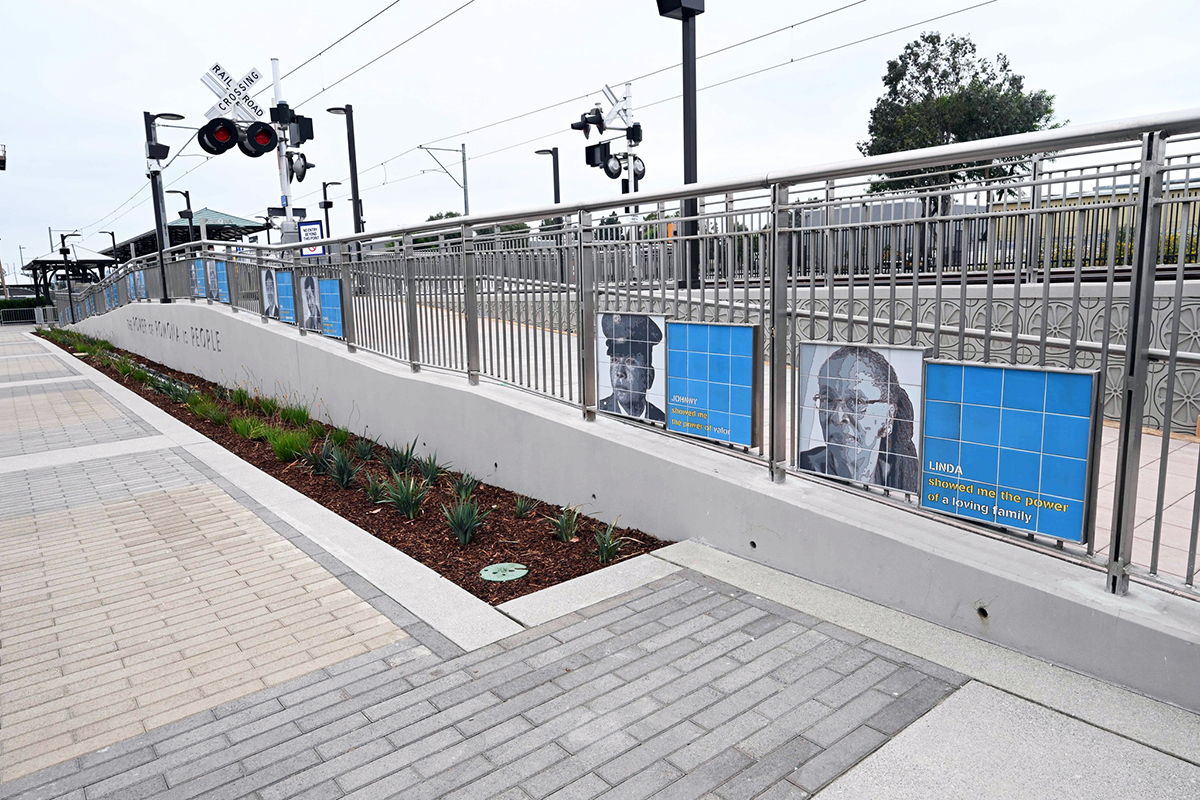
The Pomona Metro A Line station. Photo/courtesy of Metro Gold Line
by Andrew Alonzo | aalonzo@claremont-courier.com
The long planned Claremont to Montclair segment of the Metro A Line light rail extension was thrust into limbo last week when the San Bernardino County Transportation Authority Board of Directors voted 15-11 to stop negotiating a memorandum of understanding with the Foothill Gold Line Construction Authority.
The SBCTA Board also voted against spending $15.2 million to cover design procurement costs for the new segment, and directed staff to study other transit options to Montclair beyond the Gold Line, using the $37 million in local funding the agency had earmarked to go toward construction of the Gold Line sexgment to Montclair.
While the September 3 move effectively pulls the plug on the Claremont to Montclair segment, plans to use some $798 million in state funding over the coming years to construct the Pomona to Claremont segment have not changed.
“After several months of discussion, the outcome of today’s vote reflects just how deeply engaged the Board was in this discussion,” SBCTA’s Legislative and Public Affairs Chief Tim Watkins wrote in a statement after Wednesday’s vote. “It also underscores the Board’s recognition of Montclair’s commitment to transit-oriented development and its desire to honor that investment, even as the Board takes the responsible step of ensuring that San Bernardino County funds are used wisely, transparently, and with full accountability.”
Support for the decision was not unanimous. Montclair Mayor John Dutrey and Chino Hills Council member Ray Marquez pushed to continue work on the MOU. Construction Authority Chair and Claremont City Council member Ed Reece and Foothill Gold Line Joint Powers Authority Secretary/Treasurer and Montclair City Council member Bill Ruh touted the extension’s economic benefits for the region, quoting from an economic analysis by Kleinhenz Economics that is viewable at foothillgoldline.org.
Talks between the agencies on the MOU have been ongoing since July. Watkins cited concerns about the construction authority’s “governance structure behind the project,” and noted that Wednesday’s decision “was not made hastily,” writing it weighed factors such as timing, pricing, and SBCTA funding commitments.
“It comes after nearly a decade of deliberation about the ever-escalating timelines and costs associated with the extension, coupled with the Board’s frustration over the absence of local control in decision-making,” Watkins wrote. “The Board’s course of action reflects responsible transit planning – prioritizing regional connections, avoiding duplicative or overlapping services, and ensuring that scarce taxpayer dollars are invested where they deliver the most value.”
Lisa Levy Buch, chief communications and strategic development officer for the construction authority, told the Courier Wednesday SBCTA staff “wanted to basically approve everything” associated with the project. Those sentiments were echoed in a Wednesday email from Gold Line Construction Authority CEO Habib Bailan.
“As I stated last week, the Construction Authority has been working closely with SBCTA over the past several months to come to agreement on a working relationship in which the Construction Authority has the authority to design and build the project and SBCTA has significant opportunities to provide input into the process,” Bailan wrote. “But SBCTA did not accept the terms of that agreement; and today their board confirmed their fundamental concern – not wanting an outside agency having authority to make decisions in their county. This is despite the Construction Authority’s statutorily mandated role to plan, design and build the project; as well as our successful track record of completing $3 billion of projects on time and on budget.”
Recent construction cost increases also hindered the process, according to a report from SBCTA staff at gosbcta.com, which stated estimates for designing and building the light rail extension in San Bernardino County went from $80 million in 2018 to between $145 million to $244 million in 2025 — well over the county’s budget. Since 2017, SBCTA committed about $80 million in state and local funding for San Bernardino County’s extension segment — about 0.65 miles in length. Each county has its own respective budgets for their light rail costs.
Wednesday’s decisions were just the latest setback for the light rail project. In March, the construction authority sent out a request for proposal for a new project designer and construction manager after delays in inking a contract with its chosen construction and engineering firm, Kiewit.
“In terms of L.A County and moving forward, we’re getting proposals next month, we are continuing to move forward,” Levy Buch said. “And where there’s a setback is with the Montclair piece of it. We have to figure out what our next steps are and if there’s a way to continue to have Montclair be in in sync with Claremont. As of today, it seems like that’s not going to be the case.”
Construction authority staff would evaluate next steps in the coming weeks.
1 Comment
Submit a Comment
You must be logged in to post a comment.






Interesting and disappointing. Were I a Montclair resident, I would be more than a little upset, as it means I have to go further to use light rail or pay for the less frequent MetroLink train to get to Claremont. This will now impact parking at the Claremont station, as people from San Bernadino County will go to the closest place to park, which is Claremont. A wasted opportunity by San Bernardino County.