





This is Claremont
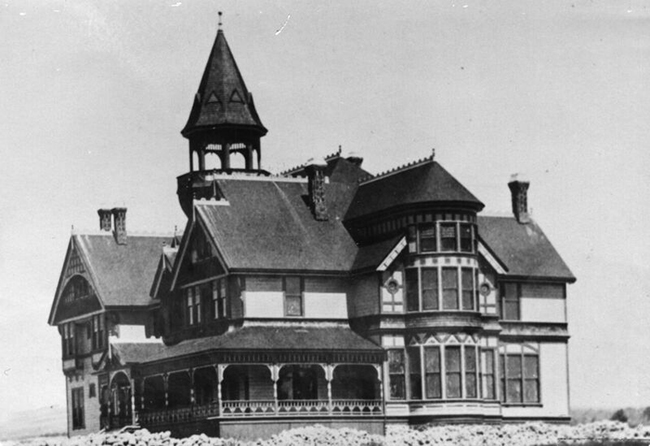
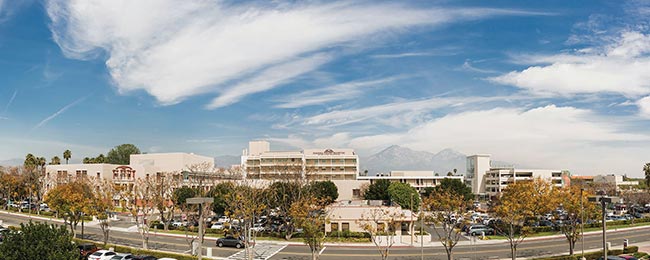
The Hotel Claremont was never occupied as a hotel, but would become the home of Pomona College. Photo/courtesy of Claremont Heritage
The third installment in an occasional series
By John Neiuber | Special to the Courier
By 1888, the promise of the future town of Claremont was all but dead. The boom was over, a recession had set in, and as stated in the second installment, Claremont had reverted to brush and stones, the “white-painted stakes marked the burial place of the promoters hopes” and the “hollow shell of an unfurnished Hotel brooded over their betrayed dreams.”
Many of the early planned cities along the Santa Fe Railroad line simply died, to rise no more. But not “Claremont—The Beautiful,” as proclaimed in advertising of the day. In “This is Claremont,” the authors tell us, “She was not born to die, for happily there had come to this new section that which was more enduring than speculation,” referring to education.
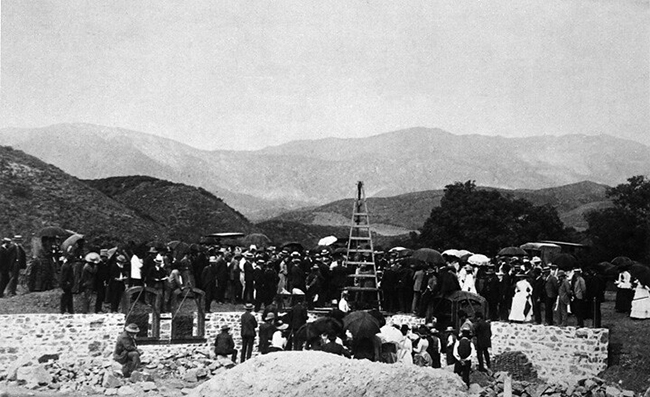
500 people attended Pomona College’s September 27, 1888 groundbreaking and laying of the cornerstone on Piedmont Mesa. Photo/courtesy of Claremont Heritage
As early as 1869, four pioneer churches created the Southern California District Association of Congregational Churches. At the first meeting of the association, they created permanent committees on home missions and education. Eighteen years later the association had 21 churches and 1,200 members and was renamed the General Association of Southern California. The newly formed association met on May 5, 1887, and according to the minutes it voted at exactly 11:15 a.m. “That the Committee on Education have full power to act in regard to propositions looking toward the establishment of a Christian college in Southern California, and, if need be, in the appointment of trustees, the committee to be required to take final action within thirty days.”
Thirty days to decide on all matters related to establishment of a college seems a relatively short timeline; however, the committee had been planning for 18 years. The meeting was during the optimism and promise of the boom, and the members appeared to be caught up in what the book calls, “the swelling tide of inflated enthusiasm.”
During the May 5 meeting, the committee also voted to increase the membership of the committee to 12. On May 18, the committee elected the first board of trustees, of which two prominent names would be named officers and forever be linked to the future of Claremont and Pomona College: the president, Henry Austin Palmer, and the secretary, Charles Burt Sumner.
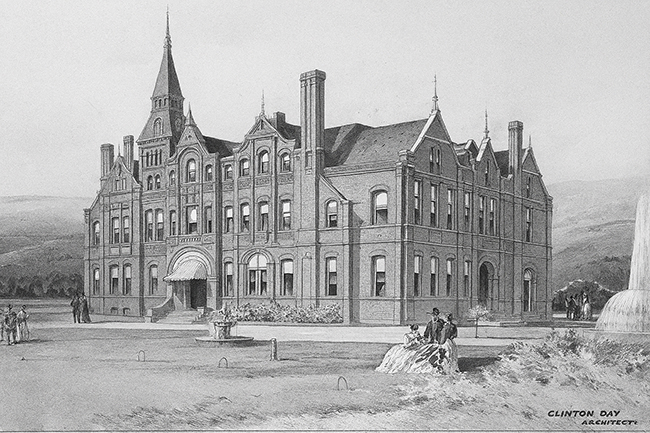
A rendering of the proposed design of the first college building on Piedmont Mesa by San Francisco architect Clinton Day. Photo/courtesy of Claremont Heritage
The Rev. Mr. Sumner, from the time he came to Pomona, along with Palmer, had been interested in the college idea and had worked together on the committee on education. Even before they were appointed by the committee as members of the first board of trustees, they had solicited gifts of money and land that would put Pomona first among competing communities for the college.
Scanlon Mesa, what is known today as the Piedmont Mesa area of Claremont at the base of the mountains north of Pomona, was selected and had been subdivided into the townsite of Piedmont. Palmer had donated 30 acres of land as the campus, along with the water rights and alternate lots of a larger area of the mesa. Others donated acreage, and many promises of gifts of money were obtained. The aforementioned “tide of inflated enthusiasm” saw plans to sell the lots to build and equip the large college building pictured in its early literature, leaving at least $100,000 as an endowment. The trustees came on board with Palmer’s and Sumner’s plan.
Believing that the college needed to be established and could not be delayed until the completion of the building, they rented a small house under the provisional name of The Pomona College, which would be “changed to some less agricultural and more suitable appellations when the institution took possession of Piedmont.”
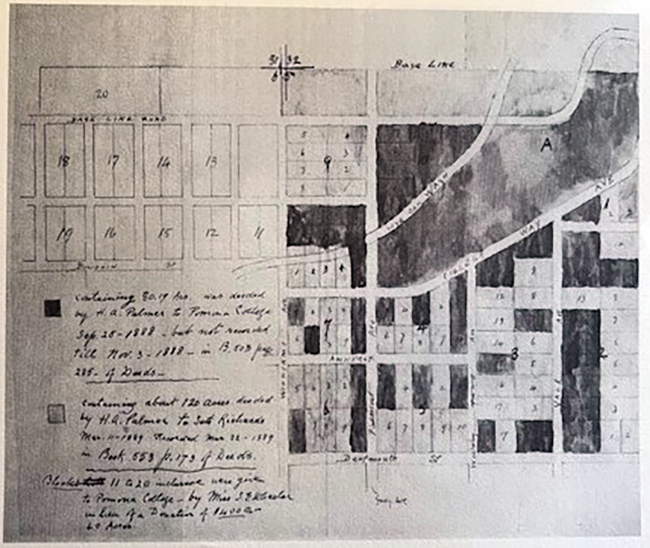
A map by Henry Austin Palmer of the future town of Piedmont. The darkened area along College Way and Live Oak Wash was to be the site of the college. Photo/courtesy of Claremont Heritage
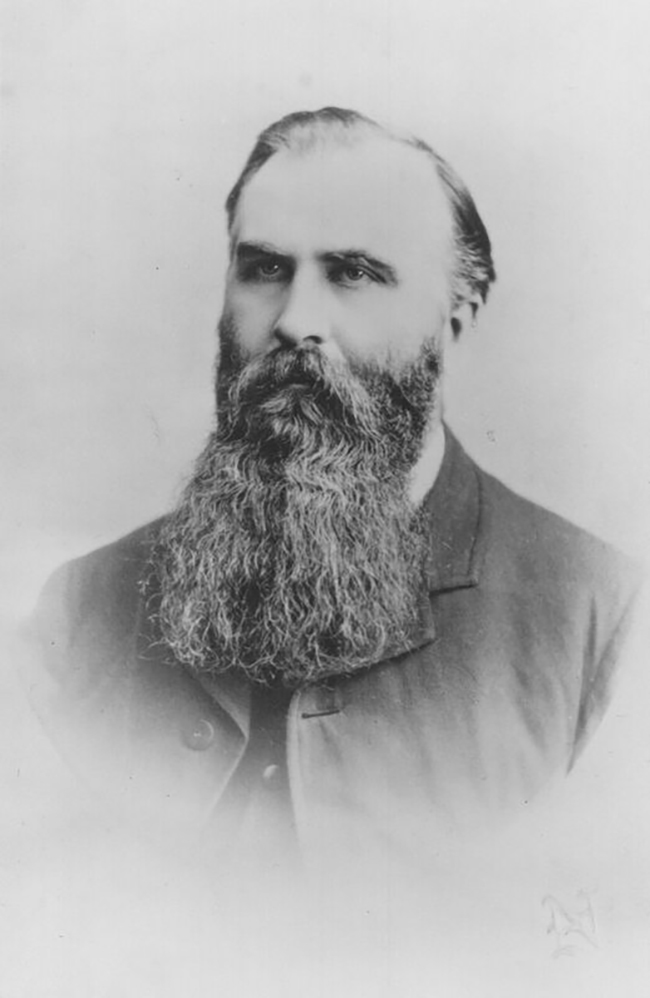
Henry Austin Palmer was instrumental in the establishment of Pomona College, serving as the president of its board of trustees, and securing its first land on Piedmont Mesa, then in Claremont.
On September 12, 1888, instruction began in the four-room cottage in Pomona with a student body of two college-aged students and 30 from high school or lower grades. The faculty of three included Edwin C. Norton, an Amherst and Yale graduate, who was principal and teacher of Greek and other subjects, Frank P. Bracket, mathematics and Latin, and Mrs. Harry Storrs, who instructed the lower grades.
The cornerstone of the proposed building on the soon to be Piedmont Mesa was laid on September 26, 1888, with all the proper pomp and ceremony the day demanded, this despite evidence it would ever come to fruition. After the ceremony, a trustee, the Rev. T.C. Hunt, walked principal Norton to the eastern edge of the mesa and said, “The boom is over, and this building will never be completed.” He then pointed to the vacant hotel in Claremont. “Do you see that empty hotel over there? I know the men who own most of it. They would give it to our college with a good number of lots. The hotel would give you a place to cover your heads until you know whether the enterprise will live or die.”





0 Comments