





What it really costs to deliver the Courier each week

by Peter Weinberger
At some point, the numbers stop being abstract and start telling you something you can’t ignore.
That’s where the Claremont Courier is today.
After taking a hard, honest look at our costs, we found something we could no longer overlook: we are losing money on every print subscription we deliver.
That reality is forcing a decision we have worked hard to avoid.
Like nearly every business, we are facing steady increases in the cost of operating. Some are familiar: printing and postage continue to rise year after year. But those are only part of the story.
Our single largest increase is health insurance. Add to that business liability insurance, auto insurance, and a growing list of other required coverages, and the costs add up quickly. These are not optional expenses — they are part of running a responsible, sustainable organization.
We also rely on third-party services to help manage the business. For example, the Community Newspaper Project handles our subscription management and processing — critical infrastructure that allows us to serve thousands of readers efficiently.
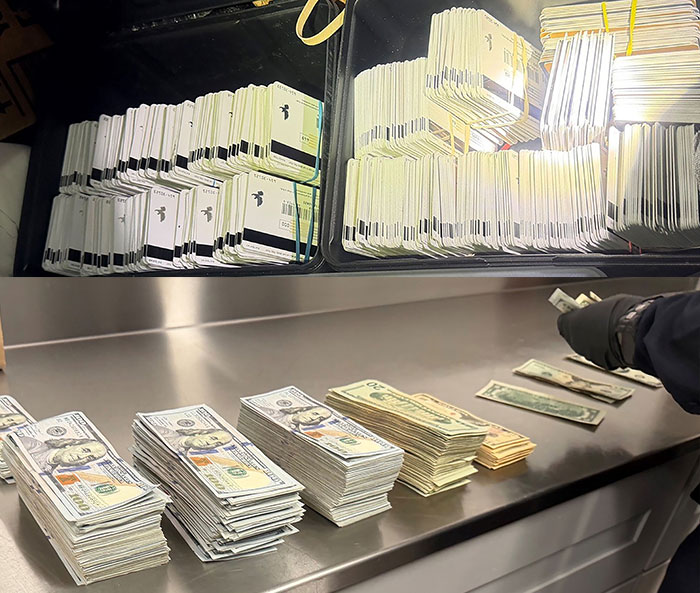
When we recently added up the true cost of producing and delivering the print edition (we did not count reporters, editors, or business employees), the result was eye-opening: the Courier spends $109 a year per print subscription.
Subscriptions have never been a major profit center. But historically, they have at least covered the basic cost of getting the newspaper to your doorstep.
That is no longer the case.
To understand why, it helps to look at what goes into a single edition of the Courier.
It starts with reporting. Our reporters and photographers are out in the community every week covering meetings, events, and local stories, averaging about five assignments each week. They gather information, conduct interviews, write stories, and shoot, process, and caption photos.
From there, everything is edited. Editor Mick Rhodes reviews each story using AP style, often rewriting sections, adding context, tightening language, and ensuring accuracy. Writing concisely is an art; editing for clarity and length takes time and experience.
Other sections require just as much attention. Andrew Alonzo compiles the community calendar from numerous sources and works with the Claremont Police Department to produce the weekly police blotter. News briefs are written and edited. Obituaries, often submitted by families during difficult times, require careful handling and editing to ensure they are accurate and respectful.
On the business side, there is an entirely different set of responsibilities. Advertising must be sold, designed, proofed, and approved — work overseen by our general manager, Anna Hoy. Billing is a major undertaking, especially with thousands of subscribers, with many requiring multiple reminders to renew.
Public notices must be handled with precision. These are legal documents, and even a small mistake can invalidate a notice and require it to be republished several times.
Then comes production. Editorial designer Skylar Anderson handles the layout of the paper, a process that takes roughly 12 to 16 hours each week. She also designs our special editions, trying to give each edition a unique presence. Grace Felschundneff manages sales and design of our real estate section and handles the layout of classifieds. This is basically the back eight to 10 pages of the newspaper and involves a high level of detail work.
Once the paper is edited, proofread, and has final approval from the editor, it is sent to our printer Thursday afternoon. When it’s ready, Tom Smith picks up the 3,000 copies and delivers them to our mailing crew, who then prepares them for delivery, applying address labels, adding ad inserts, and bagging each copy.
The final step begins very early Friday morning, when the papers are delivered to the La Verne post office and enter the USPS system, where carriers deliver them to homes across Claremont and the surrounding communities.
That entire process — 52 weeks per year — is what it takes to produce a local newspaper.
And that doesn’t include accounting, nonprofit compliance, website operations, or customer service, all of which are essential to keeping the Courier running smoothly.
When you look at it that way, it’s not surprising that the cost reaches $109 per subscription.
For all of these reasons, we are adjusting our subscription rate. Beginning this year, a yearly subscription will be $115 for 62 editions, including 10 special issues, twice-weekly newsletters and our daily website. Remember, after we send the print edition to our printer, all content is posted online.
We are also introducing something new: a membership model for readers who want to go a step further in supporting the Courier.
Memberships at $250 and $500 annually include a subscription along with a direct opportunity to engage with our work. Members will be invited to gatherings with Courier staff to discuss coverage, local issues, and where journalism is headed in our community. They’ll also be invited to an annual luncheon at the Garner House. Our first gathering is scheduled for April 21.
We have made a deliberate decision not to rely on large galas or one-time fundraising events. Instead, you will continue to see our annual fundraising drive in the final quarter of the year, while memberships help provide steady, year-round support for the work we do.
That kind of consistency matters. It allows us to plan, to invest in coverage, and to maintain the level of journalism this community expects.
The Courier today is a true hybrid — print and digital. Every story, photo, and advertisement is posted on our website and updated as news develops. We are working every day of the week to keep Claremont informed.
We don’t take any of this lightly, especially asking readers to pay more.
But if we are going to continue providing fact-based, award-winning local journalism — something that is needed now more than at any point in my lifetime — we have to align our pricing with the real cost of doing that work.
This is about sustainability. It’s about maintaining a trusted source of information for Claremont. And it’s about ensuring that the Courier remains here, doing this work, for years to come.





0 Comments